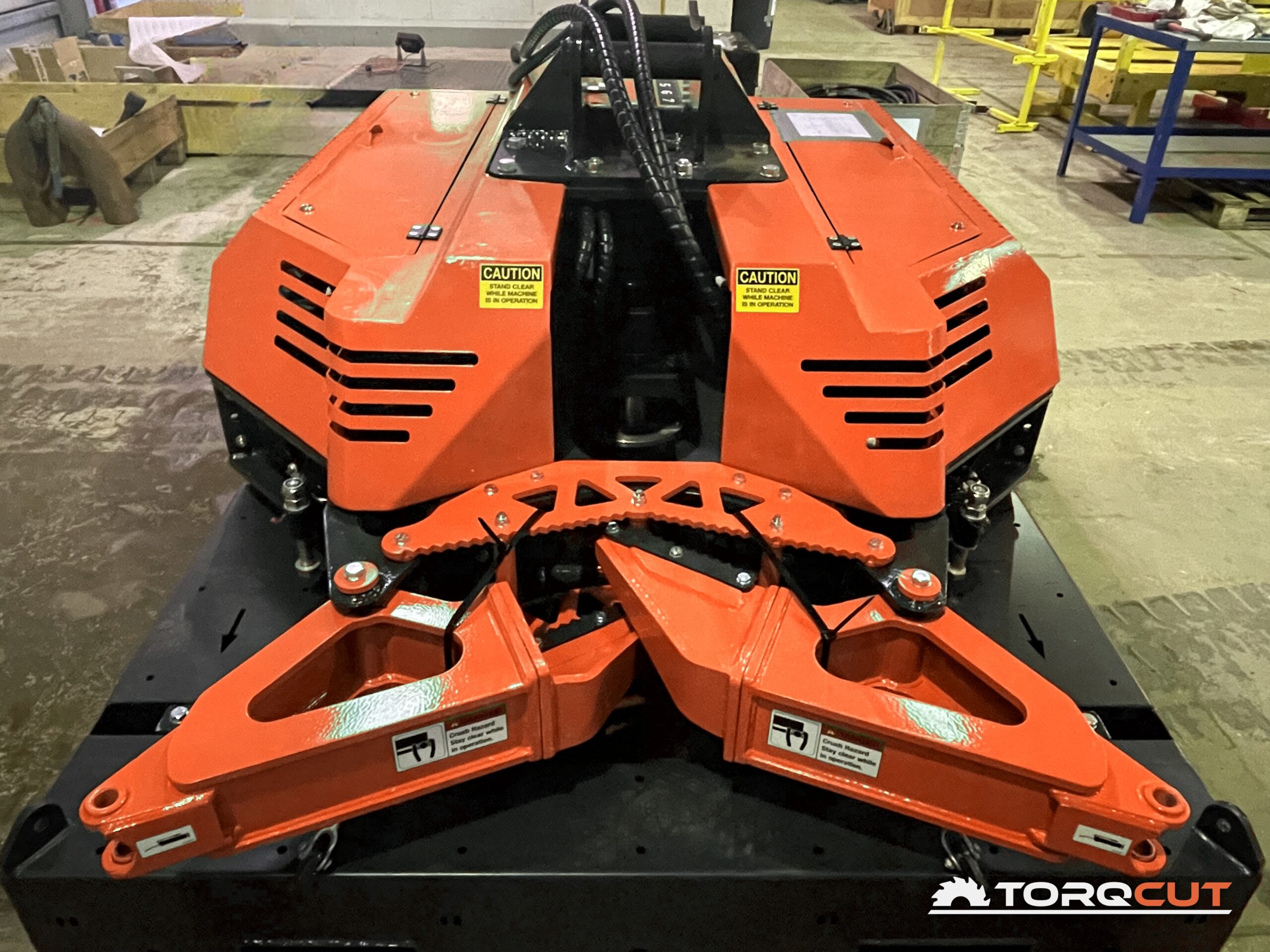
Decom Engineering’s TorqCut tool is cutting through to new onshore campaigns, securing sales into the US onshore wellhead market and generating international opportunities across pipeline removal, piling and nuclear decommissioning markets.
The hydraulic cold-cutting range applies Decom’s proven subsea cutting expertise to land-based campaigns, offering contractors a remotely-operated alternative to oxy-fuel burning and manual cutting methods.
Applications include steel and concrete piling, onshore wellhead removal and well abandonment, pipeline decommissioning, and specialist dismantling where clean cuts and material recovery are priorities.
Decom Engineering managing director, Nick McNally, said: “We are not trying to shoehorn a subsea cutting solution into an onshore environment but instead have devised application-specific designs for onshore projects.
“We are really encouraged by the industry response to TorqCut, with potential clients seeing how cold cutting can help them recover or repurpose materials in a way standard methods cannot.”
Sales of TorqCut units to a UK client for use on onshore wellhead projects in California have signalled a strong start for the excavator-mounted range.
In Asia Pacific, Decom is in early discussions with an operator over the removal of a long onshore pipeline section in challenging terrain, while the company is following up strong interest in Canada to assist in the removal of onshore oil and gas infrastructure.
A custom-built 16” TorqCut is being trialled for a nuclear sector client where a decommissioning project has a target of achieving 90% recycling of materials.
Onshore wellhead plug-and-abandonment projects have emerged as one of TorqCut’s strongest early markets, with operators in Texas looking for alternative methods for cutting piles, a task predominantly carried out by hand using oxy-burners or grinders.
Decom’s cold-cutting saws, the technology now sold onshore as TorqCut, also proved their worth on a 100-cut plus campaign on a contaminated Dutch pipeline where hot work could not be used, and on an environmentally sensitive site in Western Australia the excavator-mounted tool completed a cutting project on a glass-reinforced epoxy pipeline.
Closer to home, the same technology was used on a landfill site in the Scottish Borders, where cold cutting was chosen to avoid the risk of igniting methane escaping from the ground.
Cost-effectiveness has been central to the design. TorqCut units are built specifically for the carriers, duty cycles and site conditions of land-based work, and are sold outright rather than hired, so contractors own the capability across a full programme of projects rather than paying for it job by job.
On site, the saving comes from what cold cutting removes – no hot work permit cycle, no gas testing between cuts, no fire watch, and no standby time while adjacent work stops. A square, clean cut also protects the resale grade of recovered steel, which on a large removal campaign can be worth more than the cutting cost itself.
Nick McNally added: “The economics work because of what you stop paying for. Take out the permit cycle, the gas testing, the fire watch and the standby time, and the cut itself becomes the cheapest part of the job. The operator also retains clean, recoverable steel instead of damaged material, and owns the saw outright, so the next campaign only costs them a blade.
“We are now discussing applications with customers working on pipelines, piling and specialist dismantling, where controlled cutting can make a practical difference to how a project is delivered.”
Piling was one of the first onshore applications tackled by TorqCut and the company sees significant potential in both construction piling and the cutting of oil and gas tubulars, which can be repurposed as piles in construction projects.
Decom Engineering head of business development, Michael O’Neill, said: “The value of our patented cold-cutting tools lies in the cutting method itself, rather than the subsea environment they were first designed for. As a result, Decom is no longer confined to subsea campaigns and is increasingly targeting onshore and industrial opportunities where safety and precision matter, and where a clean cut preserves materials for reuse or recycling.”
Decom is also exploring a joint venture to develop a smaller automated micro-piling tool for material up to 8” in diameter.
Nuclear decommissioning is another potential growth area, where the ability to cut remotely, without heat and with minimal secondary waste, fits strict safety and recycling requirements.
Longer term, Decom believes the technology could be built into factory production lines, replacing band saws for demanding cuts such as umbilical products.
- TorqCut units are available to purchase outright, backed by Decom’s after-sales support and warranty, giving contractors ownership of the technology on their own projects.